Intelligent Future.





%22%20%2F%3E%0A%20%20%0A%20%20%3C!--%20Premium%20Ambient%20Blurred%20Orbs%20--%3E%0A%20%20%3Ccircle%20cx%3D%22240%22%20cy%3D%22160%22%20r%3D%22160%22%20fill%3D%22hsl(265%2C%2055%25%2C%2030%25)%22%20opacity%3D%220.38%22%20filter%3D%22url(%23blur)%22%20%2F%3E%0A%20%20%3Ccircle%20cx%3D%22560%22%20cy%3D%22290%22%20r%3D%22200%22%20fill%3D%22hsl(325%2C%2055%25%2C%2040%25)%22%20opacity%3D%220.32%22%20filter%3D%22url(%23blur)%22%20%2F%3E%0A%20%20%0A%20%20%3C!--%20Inner%20Glassmorphic%20Badge%20--%3E%0A%20%20%3Ccircle%20cx%3D%22400%22%20cy%3D%22225%22%20r%3D%2268%22%20fill%3D%22rgba(255%2C255%2C255%2C0.02)%22%20stroke%3D%22rgba(255%2C255%2C255%2C0.08)%22%20stroke-width%3D%221.5%22%20%2F%3E%0A%20%20%0A%20%20%3C!--%20Initial%20Letter%20(Georgia%20Serif%20Italic)%20--%3E%0A%20%20%3Ctext%20x%3D%22400%22%20y%3D%22225%22%20font-family%3D%22'Times%20New%20Roman'%2C%20Georgia%2C%20serif%22%20font-size%3D%2276%22%20font-style%3D%22italic%22%20font-weight%3D%22bold%22%20fill%3D%22rgba(255%2C255%2C255%2C0.9)%22%20text-anchor%3D%22middle%22%20dominant-baseline%3D%22central%22%3ET%3C%2Ftext%3E%0A%20%20%0A%20%20%3C!--%20Micro%20watermark%20--%3E%0A%20%20%3Ctext%20x%3D%22400%22%20y%3D%22335%22%20font-family%3D%22'Inter'%2C%20sans-serif%22%20font-size%3D%2210%22%20font-weight%3D%22700%22%20fill%3D%22rgba(255%2C255%2C255%2C0.22)%22%20letter-spacing%3D%225%22%20text-anchor%3D%22middle%22%3EZYPHRA%20MATRIX%3C%2Ftext%3E%0A%3C%2Fsvg%3E)
The Art of Modern Living.
%22%20%2F%3E%0A%20%20%0A%20%20%3C!--%20Premium%20Ambient%20Blurred%20Orbs%20--%3E%0A%20%20%3Ccircle%20cx%3D%22240%22%20cy%3D%22160%22%20r%3D%22160%22%20fill%3D%22hsl(69%2C%2055%25%2C%2030%25)%22%20opacity%3D%220.38%22%20filter%3D%22url(%23blur)%22%20%2F%3E%0A%20%20%3Ccircle%20cx%3D%22560%22%20cy%3D%22290%22%20r%3D%22200%22%20fill%3D%22hsl(129%2C%2055%25%2C%2040%25)%22%20opacity%3D%220.32%22%20filter%3D%22url(%23blur)%22%20%2F%3E%0A%20%20%0A%20%20%3C!--%20Inner%20Glassmorphic%20Badge%20--%3E%0A%20%20%3Ccircle%20cx%3D%22400%22%20cy%3D%22225%22%20r%3D%2268%22%20fill%3D%22rgba(255%2C255%2C255%2C0.02)%22%20stroke%3D%22rgba(255%2C255%2C255%2C0.08)%22%20stroke-width%3D%221.5%22%20%2F%3E%0A%20%20%0A%20%20%3C!--%20Initial%20Letter%20(Georgia%20Serif%20Italic)%20--%3E%0A%20%20%3Ctext%20x%3D%22400%22%20y%3D%22225%22%20font-family%3D%22'Times%20New%20Roman'%2C%20Georgia%2C%20serif%22%20font-size%3D%2276%22%20font-style%3D%22italic%22%20font-weight%3D%22bold%22%20fill%3D%22rgba(255%2C255%2C255%2C0.9)%22%20text-anchor%3D%22middle%22%20dominant-baseline%3D%22central%22%3ER%3C%2Ftext%3E%0A%20%20%0A%20%20%3C!--%20Micro%20watermark%20--%3E%0A%20%20%3Ctext%20x%3D%22400%22%20y%3D%22335%22%20font-family%3D%22'Inter'%2C%20sans-serif%22%20font-size%3D%2210%22%20font-weight%3D%22700%22%20fill%3D%22rgba(255%2C255%2C255%2C0.22)%22%20letter-spacing%3D%225%22%20text-anchor%3D%22middle%22%3EZYPHRA%20MATRIX%3C%2Ftext%3E%0A%3C%2Fsvg%3E)

World News Feed
Explore All News
China's new challenge as natural disasters strike - fake AI videos
Screenshot shows Chinese state media debunking AI content
As China deals with the fallout of Typhoon Noul that made landfall over the weekend, officials will be painfully aware that they will likely have an additional challenge to deal with: dangerously misleading videos created with Artificial Intelligence (AI).
Powerful storms and flooding incidents over the last few months have seen fake videos inundating social media platforms â these include images of dead bodies floating in floodwaters, the false depiction of severe flooding in areas actually not affected and others with blatantly fake details of emergency response efforts.
In some areas, videos containing false information about power outages prompted residents to panic buy emergency supplies.
Other videos capitalise on real-life incidents.
Flooding in Hengzhou city, Guangxi in early July caused hundreds of snakes to escape from a breeding farm. Then fake images were also published showing crocodiles being released into a river.
In an already tense and dangerous situation involving mass evacuations and complex rescue operations, authorities want to avoid panic. Now they fear that AI technology - which China is pouring billions of dollars into - is providing simple, accessible tools that can be used to trick the public.
"Many of these content creators use disaster news to try to gain followers, knowing that more sensational or exaggerated content will garner more likes and more views. They are deliberately fabricating information to grab people's attention," Huang Zhihua, Deputy Chief in charge of online public security for Zhejiang Police Department told Chinese state media.
In recent weeks, there have been arrests and punishment â ranging from detention awaiting criminal prosecution to fines â for the creation of bogus reports and video content.
But experts are warning that an unprecedented crisis of misinformation could be looming.
Fake content purportedly shows crocodiles being released into a river
In an article published by the newspaper of the Communist Party's Central Party School, Professor Chen Bin said, "AI dramatically lowers the technical barriers to producing false information. Individuals no longer require sophisticated technical skills. By simply prompting AI tools, they can rapidly generate convincing text, images, audio and video⦠which is highly realistic but entirely fabricated content, manufactured on a large scale."
Professor Gao Fuping, from the East China University of Political Science and Law, told the BBC that motivation for the publishing of such false content ranges from those who do it "to create something amusing without thinking about the consequences", to those who want to "generate traffic for personal gain" or those who wish to deliberately "cause panic or social unrest".
"Some users think the online world is anonymous and unregulated or that they cannot be traced," he said.
There have been calls for all AI-generated content to be clearly stamped but other users can then just re-edit the material removing the markings.
Professor Xu Xiaoke from Beijing Normal University told the BBC that greater efforts were also needed to verify geographic locations with timestamps and the checking of image sources.
"That said, I would also stress that detection technology still lags behind generation technology. We're in a constant cat-and-mouse game. So we should not assume that technology alone can identify AI-generated content with the click of a button," he warned.
AI content purports to show the rescue of pigs prioritised over people
The Chinese government is embracing AI in its bid to become the leading tech superpower.
In 2017, it announced that AI would be "the main driving force" of the country's progress.
Vast sums of money is pouring into AI businesses seeking more capital, fuelling domestic competition. The state-controlled wire service Xinhua reports that the country has over 6,000 "AI companies".
In this climate, Prof Xu believes that China needs to build "trusted information infrastructure". This could include official government early warning systems and disaster interfaces which news organisations can access.
But there have been instances of official sources, including government-controlled media, deliberately downplaying disasters, which has led to some public mistrust in this area.
Earlier in July, local journalists were asked to "soften" their language to describe a major breach in the wall of the Liulan Dam near Naning as an "opening" or "gap".
Officials appeared to be trying to make the breach sound less alarming but the consequences were deadly. Water bursting through the broken dam led to at least 26 deaths downstream.
This video can not be played
Fatal Typhoon Maysak floods burst dam wall in China
And this is not an isolated incident.
In 2021, local officials were arrested, accused of concealing or underreporting 139 deaths in Henan province.
Incidents like these have resulted in a trust vacuum that has made it much easier for bad actors to spread fake content.
But police are imploring people to trust accredited sources during emergencies.
"When encountering disaster-related information from an unknown source, approach it with scepticism and rely on official announcements," Gao Kai from the Ningbo Public Security Bureau said.
He also tried to reassure the public that the creators of false information would be caught, saying that "the internet is not a lawless zone. Public security authorities will continue to intensify efforts to crack down on illegal online activity".
"We've created a specialised task force to monitor social media closely, especially short video platforms. They will investigate and handle these cases quickly, cracking down in a very strict manner".
Punishment could range from a fine to up to seven years in prison if the fallout of the misinformation is serious enough.
On 23 July, China's Cyberspace Administration also announced a nationwide crackdown on fake internet content related to floods and other disasters, ordering its local branches to focus on catching out fabricated data, malicious editing, staged scenes, misattributed historical events and those impersonating officials. In addition, it called on social media platforms to strengthen the review of the content they are publishing.
Prof Gao believes "the answer is public education combined with law enforcement", saying that there was a "need to publicise real cases where people have been punished."
He added that "the harm caused by AI-generated fake content is ultimately the result of how people choose to use the technology - not the technology itself", adding that existing laws were sufficient to deal with it.
However, others are not so confident. Professor Chen pointed out that "AI technology continues to evolve much faster than legal frameworks. As new legal questions emerge, AI misinformation remains a considerable challenge."
Shanghai and Washington based lawyer Peter Pang says lawyers around the world are seeing an explosion in the number of cases dealing with these issues.
He believes that the companies that create AI apps and the platforms used to publish fake videos and other material must be held legally accountable along with the people who create misinformation.
"The first line would be the platforms, because they're the ones that are the enablers. They're the ones that allow this to go out," he told the BBC.
He used a hypothetical example of a person who runs over a pedestrian following panic induced by a fake post on social media.
"The video creator might say 'you ran over somebody. That's your problem. I didn't do it.' But let's think it through. You created the foundation from which people reacted. If you created that panic, you need to have responsibility for consequences that occur."
And Professor Xu warns that "AI-generated misinformation is likely to increase not only in volume but in the speed with which it spreads."
"Looking ahead, political elections, public health emergencies, armed conflicts, natural disasters and issues affecting people's livelihoods are all likely to become high-risk areas for AI-generated misinformation.
"Instead of waiting for false information to go viral before trying to contain it, governments and platforms should now be preparing in advance."
'The water just came so fast': Typhoon triggers floods and rare tornadoes in China
Watch: Moment rare tornado lashes central Chinese cities
Fatal Typhoon Maysak floods burst dam wall in China

A Japanese town wrestles with identity after protests over its first mosque
Plans for a new mosque in Fujisawa have sparked a wide range of emotions
Today, it's a field of grass. But soon, it'll be the site of the first mosque in this Japanese town.
"It makes me worry about how our community might change," says long-time resident Noriko Izumizawa.
Plans to build an Islamic religious site in Fujisawa, a laid-back seaside town about an hour's drive south of Tokyo, have sparked a wide range of emotions.
There is anger and fear, as well as hope and acceptance, exposing the growing anxieties over immigration and social change as Japan grapples with a labour shortage from a shrinking and ageing population.
Although immigration remains politically sensitive and restrictive, Japan is increasingly relying on foreign workers to fill open jobs. That means an influx of immigrants with various cultures, languages, religions and ways of being.
So the debate that is playing out in towns like Fujisawa across the country is one that goes to the heart of how Japan sees itself.
Izumizawa is not alone in the way she feels. She is among a group of Fujisawa residents who are anxious about the increasingly visible Muslim community. She says that the polarising debates around immigration in the US and Europe have also contributed to her unease.
Noriko Izumizawa worries about how the construction of a new mosque in her town could change the local community
Earlier this year, anti-mosque protests flared up at the local train station, where thousands took to the streets to object to the proposed construction of the mosque. Some argue that a mosque much larger than the nearby Japanese Shinto shrine is disrespectful.
There have also been reports of hate speech and misinformation spreading on Japanese social media. Local outlets say mosques have been receiving abusive phone calls and emails, some of which has prompted anti-hate groups to organise counter protests calling for no hate.
Hiroki Suzuka, who manages a coffee shop opposite the road where the Fujisawa mosque is set to be built, calls for greater understanding and dialogue.
"I'm not particularly opposed, but I wouldn't say I'm strongly in favour either," Suzuka said.
"I think the first step is to learn about them, what Islam is, what kind of people they are, and what values and perspectives they hold. It begins with having an open mind and a desire to understand each other."
Businessman Mohamed Mohideen has lived in Osaka for the past 39 years. He moved from his home country Sri Lanka in 1987 for better work opportunities during the economic bubble.
He has dealt gemstones and later worked in trade, exporting used cars to countries like Sri Lanka and Pakistan.
He moved at a time, he says, when there were far fewer foreign residents.
But Mohideen feels that compared to back then, local people have become hostile and started making hurtful remarks at Muslims, both online and in person.
"On social media, there are countless comments like, 'Get out of Japan' and 'Go back to your own country,'" Mohideen said. "People have also started coming to the mosque and shouting abuse."
Mohideen goes to the Osaka mosque every day for prayers and other duties as a member of the local Islamic community. He says he has never felt that his life was in danger.
Despite having good relationships with neighbours for many years, Mohideen has noticed the shift in attitude towards Muslims more recently.
"Now, I feel that people are afraid of us."
The verbal abuse has worsened in recent years. He recalled members of his Muslim community being called terrorists, accused of making bombs, and being told to get out of Japan.
"When that happens, the only thing we can do is be patient. They're trying to provoke a fight or create a confrontation. They want to see how long we'll tolerate it," Mohideen explained.
"So we stay calm, speak gently, and treat them kindly, because Japanese people generally don't know much about Islam."
Still, he thinks there is some shared responsibility for the rift.
"We focused only on our work and, for a long time, didn't make enough effort to help people understand who we are. We also didn't do enough to become part of the society," he said.
"From now on, I want to work harder to increase dialogue and build better mutual understanding."
Japan's Muslim population has grown in recent decades and there are a number of mosques in the country
Shakeel Mohamed, 61, has been representing the Yashio mosque in Saitama prefecture for the past decade. He had worked as a construction site supervisor for 26 years after moving to Japan from Pakistan and speaks fluent Japanese.
Mohamed says the most important thing is to follow Japan's rules, including sorting refuse properly, obeying parking laws, and wearing helmets when riding your bicycle.
"We make every effort to respect the way things are done in Japan and to follow the rules," he said. "Courtesy is important too, even something as simple as greeting people."
He said Japanese locals in Yashio refer to the area's Pakistani community as "Yashio-stan".
"Of course, there are some Pakistanis who behave badly, but they're only a small minority. And the same is true of Japanese people."
Japan is wrestling with its identity in the face of huge demographic shifts.
Muslims in Japan, including foreign residents and Japanese believers, numbered roughly 420,000 at the end of 2024, up from 230,000 in 2019, according to Hirofumi Tanada, a professor emeritus at Waseda University who studies the faith in Japan.
The country's growing Muslim population also reflects a greater nationwide trend. The foreign resident population â which mainly comes from China, Vietnam, South Korea and the Philippines - surpassed four million in 2025. A record 2.57 million of them work in Japan, according to government data. In the same year, Japan's population declined by nearly 1 million.
Government officials have long avoided describing the country as an immigration country, but push visas that are seen as more temporary than permanent. Critics describe this as a "stealth" immigration system.
But even then, Prime Minister Sanae Takaichi has adopted a highly conservative stance against large-scale immigration. In June 2026, the Japanese government decided to raise visa fees for foreign nationals fivefold, after not having increased the amount for nearly 50 years.
Now, the government is planning to increase the number of employees at the Immigration Services Agency by about 230 people, aiming to strengthen enforcement against foreigners illegally overstaying. Officials may also introduce a limit to manage the number of foreign residents in the country.
As immigrant communities become more visible, the country is being forced to confront a question it has long tried to avoid: Can Japan become a more diverse country while preserving its sense of identity and cohesion that it values?
Back in Fujisawa, Izumizawa admits she has never had a negative experience with a Muslim neighbour herself.
"The truth is, maybe I just fear the unknown," she shrugs.
Additional reporting by Chie Kobayashi
A mayor in Japan announced her maternity leave - and got the whole country talking
Do it at home too, women tell Japanese fans who cleaned World Cup stadium
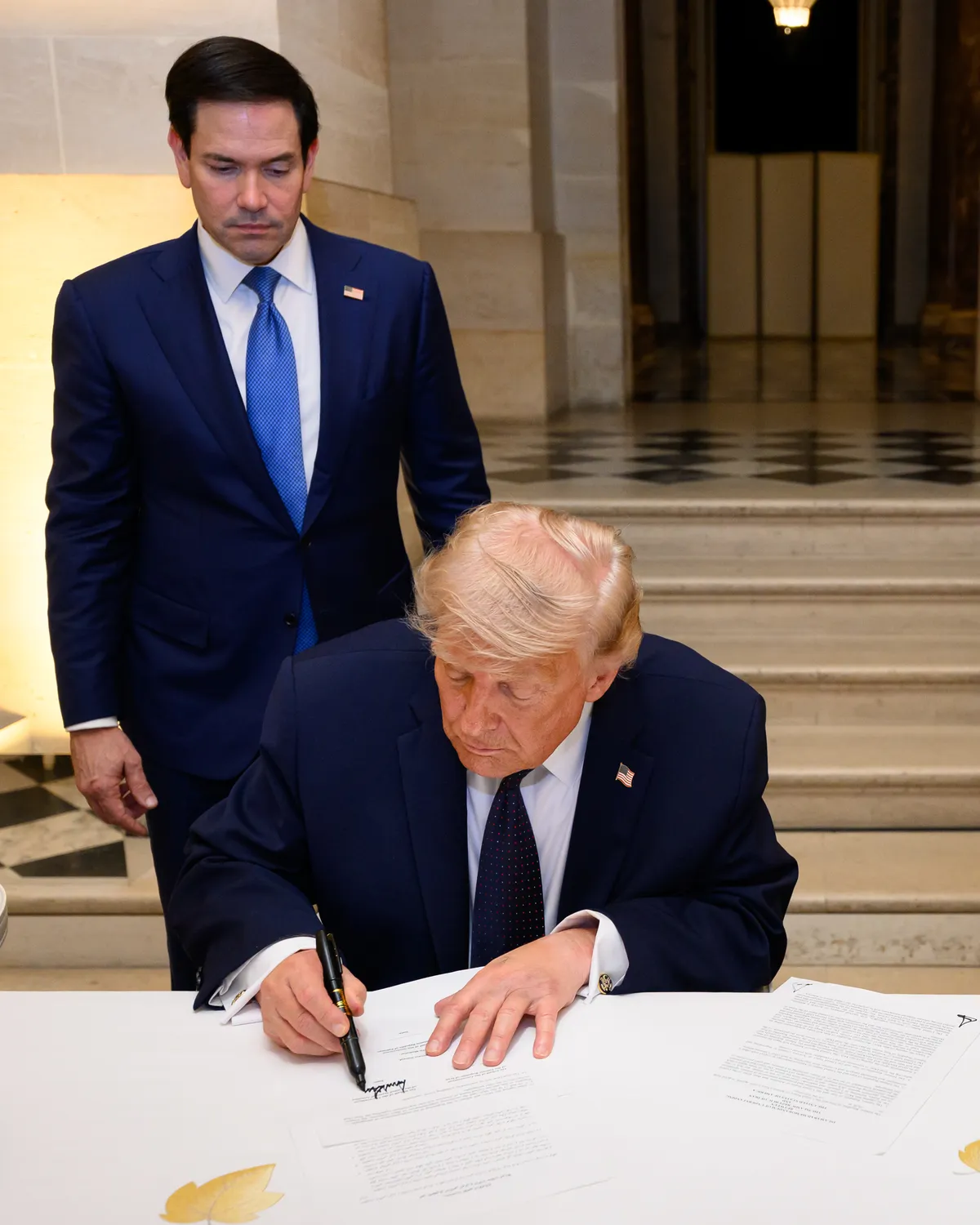
Trump says Iran war talks taking place during lull in strikes
President Trump said "good talks" were taking place
US President Donald Trump has said "there are very friendly negotiations going on" about the conflict with Iran, after the warring sides did not exchange strikes for a third straight day.
He expressed optimism for an end to the war on Monday, telling reporters aboard Air Force One: "I think there's a good chance that something could happen."
However, he warned that Washington would "go back to doing what we were doing" before the pause in fighting if the latest negotiations failed.
Tehran has denied that any direct negotiations are taking place.
Trump said he had decided to pause US strikes on Iran on Friday because the countries mediating between them had asked him to give the talks another chance.
Iran has also halted its attacks.
The pause follows nearly two weeks of daily US strikes and tit-for-tat attacks, effectively unravelling the ceasefire struck in June.
The US military said at the time that its strikes were aimed to "degrade Iran's ability to threaten commercial shipping in the Strait of Hormuz" - a global route for transporting oil.
The price of oil on Monday fell by more than 9% to $87.59 a barrel at one point on hopes the conflict could be de-escalated.
Aboard the presidential plane, Trump also dismissed media reports that after five months of fighting, US ammunition stockpiles were now running low.
"We have a lot of ammunition. We have a lot of the mid-level stuff too, more than we could ever use, no matter what," Trump said. "But we have a lot. I'd like to have more."
He said a "lot of equipment" was being built, in particular Patriots - highly valued US-made anti-ballistic missiles.
"That system is going up. We have a lot," he said.
Meanwhile, White House spokesperson Anna Kelly said the US military "has more than enough munitions, ammo, and stockpiles to serve all of President Trump's strategic goals and beyond, and Operation Epic Fury has exposed what happens when you mess with the United States."
"Even still, the president has urged our defence contractors to constantly produce more made-in-America weapons, which are the best in the world," the spokesperson added.
As the US pauses the war with Iran, is Trump really running out of weapons?
More than 600 US military service members injured since Iran War began in February
The US and Israel launched their strikes against Iran on 28 February. Tehran retaliated by firing missiles and drones on US military bases and other assets located in Gulf states, as well as on targets inside Israel.
In June, Iran and the US signed a memorandum of understanding to stop military operations and reopen the Strait of Hormuz, as well as to reach an agreement to end the war over the following 60 days.
But after Iranian forces attacked tankers in the waterway on 13 July, Washington resumed air strikes against Iran and reinstated its naval blockade of the country's ports.
Tehran retaliated with attacks on US military facilities and bases across the Middle East, killing four American soldiers. The US strikes have since killed dozens of people, according to Iran's health ministry.
US and Iran pause strikes for third night to make space for talks, US ambassador says
Why Iran is risking so much over the Strait of Hormuz
%22%20%2F%3E%0A%20%20%0A%20%20%3C!--%20Premium%20Ambient%20Blurred%20Orbs%20--%3E%0A%20%20%3Ccircle%20cx%3D%22240%22%20cy%3D%22160%22%20r%3D%22160%22%20fill%3D%22hsl(46%2C%2055%25%2C%2030%25)%22%20opacity%3D%220.38%22%20filter%3D%22url(%23blur)%22%20%2F%3E%0A%20%20%3Ccircle%20cx%3D%22560%22%20cy%3D%22290%22%20r%3D%22200%22%20fill%3D%22hsl(106%2C%2055%25%2C%2040%25)%22%20opacity%3D%220.32%22%20filter%3D%22url(%23blur)%22%20%2F%3E%0A%20%20%0A%20%20%3C!--%20Inner%20Glassmorphic%20Badge%20--%3E%0A%20%20%3Ccircle%20cx%3D%22400%22%20cy%3D%22225%22%20r%3D%2268%22%20fill%3D%22rgba(255%2C255%2C255%2C0.02)%22%20stroke%3D%22rgba(255%2C255%2C255%2C0.08)%22%20stroke-width%3D%221.5%22%20%2F%3E%0A%20%20%0A%20%20%3C!--%20Initial%20Letter%20(Georgia%20Serif%20Italic)%20--%3E%0A%20%20%3Ctext%20x%3D%22400%22%20y%3D%22225%22%20font-family%3D%22'Times%20New%20Roman'%2C%20Georgia%2C%20serif%22%20font-size%3D%2276%22%20font-style%3D%22italic%22%20font-weight%3D%22bold%22%20fill%3D%22rgba(255%2C255%2C255%2C0.9)%22%20text-anchor%3D%22middle%22%20dominant-baseline%3D%22central%22%3EU%3C%2Ftext%3E%0A%20%20%0A%20%20%3C!--%20Micro%20watermark%20--%3E%0A%20%20%3Ctext%20x%3D%22400%22%20y%3D%22335%22%20font-family%3D%22'Inter'%2C%20sans-serif%22%20font-size%3D%2210%22%20font-weight%3D%22700%22%20fill%3D%22rgba(255%2C255%2C255%2C0.22)%22%20letter-spacing%3D%225%22%20text-anchor%3D%22middle%22%3EZYPHRA%20MATRIX%3C%2Ftext%3E%0A%3C%2Fsvg%3E)
Ukraine dismisses Iranian threats as Caspian Sea strike directly links wars
The Caspian Sea forms a strategically vital direct supply route between Russia and Iran
Ukraine has dismissed Iranian threats of retaliation, following Kyiv's targeting of an Iranian cargo vessel in the Caspian Sea on Saturday.
The incident marked the first direct link between the wars in Iran and Ukraine.
"Iran's threats are unjustified and groundless," Ukraine's Foreign Minister Andrii Sybiha posted on X this afternoon.
"The regime in Tehran is a direct accomplice to Russian aggression against Ukraine, fuelling Moscow's criminal war with weapons that have killed Ukrainians since 2022," he wrote, referring to the start of Russia's full-scale invasion.
President Volodymyr Zelensky on Saturday announced that Ukrainian forces had achieved "very good results" in long-range strikes in the Caspian Sea, including against vessels used to transport military cargo linked to Iran.
The Security Service of Ukraine (SBU) said its drones had hit an oil platform in the northern Caspian Sea, along with a Russian missile boat and "cargo ships that are under international sanctions."
Iran's ambassador to Russia, Kazem Jalali, told Iran's state news agency that the "Anna" ship had been anchored about 5km (3 miles) from the mouth of the Volga River when it was targeted.
Ukraine's ambassador to Israel, Yevgen Korniychuk, said the vessel had been carrying components for drones and missiles from Iran to Russia, not civilian cargo.
Speaking to Israel's N12, he insisted that Ukraine and Israel were confronting the same "axis of evil" on different fronts.
Iran and Russia have a close military relationship.
Iran started supplying Russia with its domestically-manufactured Shahed drones in 2022, which Moscow has since modified and used to hit Ukrainian cities.
In an interview with Sky News, published over the weekend, Zelensky said Tehran was planning to send ballistic missiles to Russia for use in the war (reports suggest that short-range missiles were already being supplied as early as 2024).
For its part, Ukraine has in recent months sent its military experts to a number of Gulf states to help them defend against Iranian drone attacks carried out in retaliation for US and Israeli strikes.
The Caspian Sea forms a strategically vital supply route between Russia and Iran.
Kyiv has long accused Tehran of complicity in drone attacks which have killed hundreds of Ukrainian civilians, but Saturday's strike in the Caspian Sea appears to mark the first time Ukraine has directly targeted an Iranian ship.
Russia has been striking Ukrainian cities with its own upgraded versions of Shahed drones that were initially supplied by Iran
Iran reacted with fury to the assault which it said had killed one sailor and injured several others. The foreign ministry said Iran had "never intervened in the conflict between Russia and Ukraine."
Iranian Foreign Minister Abbas Araghchi said the attack represented "a blatant UN Charter violation done at Israel's behest to drag Europe into its war."
The incident "CANNOT GO UNANSWERED," he wrote on X.
In his own statement on Monday, Sybiha included Araghchi's post, with the words "Iranian lies" posted across it.
He also accused Iran of trying to shift attention away from Russia's attacks on ships carrying grain from Ukrainian ports, which he said were threatening global food security.
For its part, Ukraine has been relentlessly targeting Russian shadow fleet of oil tankers, looking to choke off a major source of revenue for the Kremlin.
Along with drone strikes on oil depots and the Wildberries online retail warehouses, what Zelensky calls Ukraine's "long-range sanctions campaign" is having increasingly serious impact on the Russian economy.
But some experts question the wisdom of Kyiv's decision to pick a fight with Iran.
"The main idea... is to disrupt trading routes and cause as much damage as possible," former intelligence official Ivan Stupak told the BBC.
"But it's not a good idea for Ukraine to have another battlefront with Iran. It's not good for us," he added.
Olha Polishchuk from the Armed Conflict Location and Event Data Project (Acled) said the Caspian Sea strike was "less about opening a new front against Tehran" and instead could be seen as an extension of Kyiv's targeting of networks supporting the Russian war effort.
"Targeting that route allows Kyiv to put further pressure on Russia's supply networks beyond the traditional battlefield," she said.
The Iran war has strengthened Ukraine in surprising ways. Could a ceasefire with Russia be closer?
Iran's 'sabre-rattling' should not intimidate UK, Wes Streeting says
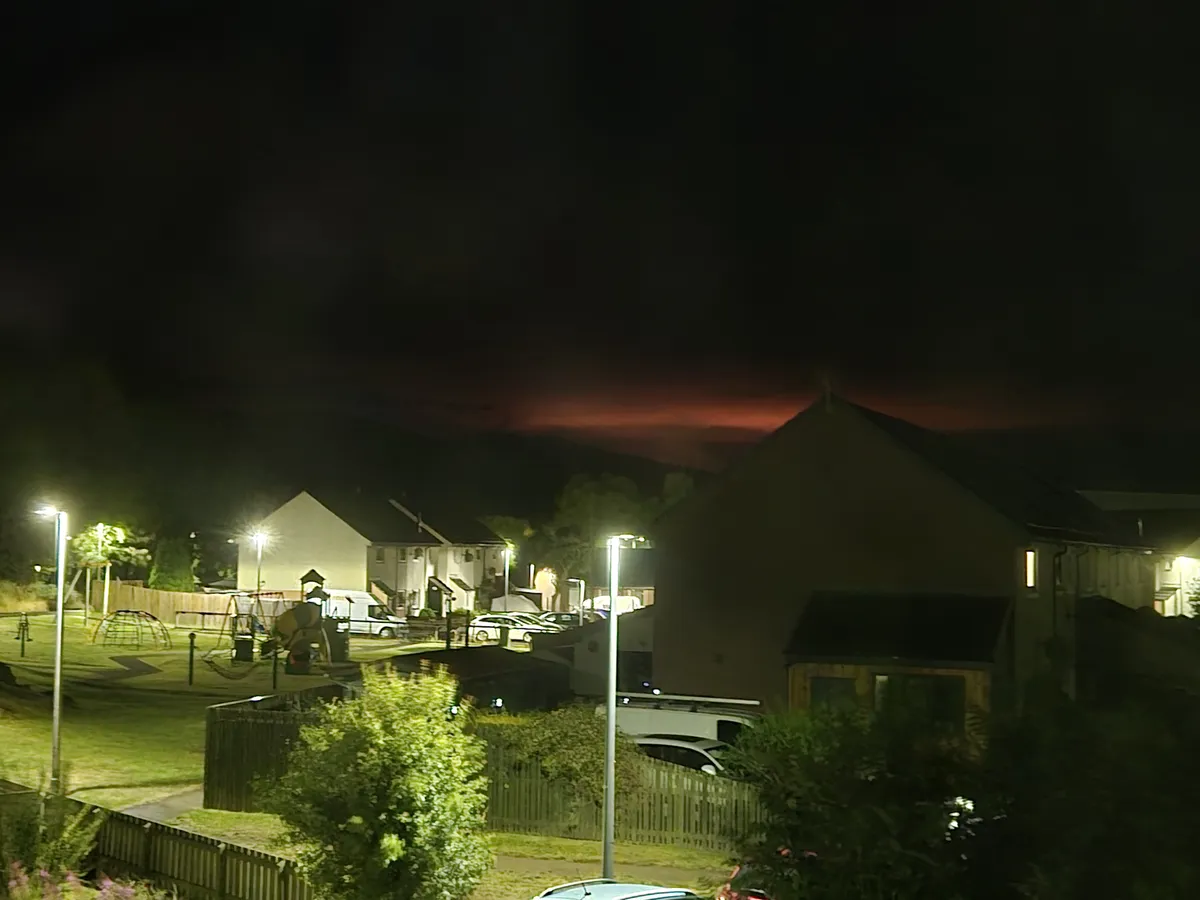
Wildfire now nine miles away from French city of Bordeaux, mayor warns
Firefighters in Gironde are facing an "unprecedented" situation as they battle a blaze that "has a life of its own", the interior minister has warned
The mayor of Bordeaux has said he is bracing for "all eventualities", as one of many wildfires raging in France is now 15km (nine miles) from the south-western city.
"We are preparing to accommodate a large number of people should further evacuations be ordered," said Thomas Cazenave.
Firefighters in the Gironde region were facing an "unprecedented" situation battling a fire that "has a life of its own", said Interior Minister Laurent Nuñez.
Some 220,000 people have been evacuated in France and more than 100,000 in Spain, where fires are burning "uncontrolled" west of Madrid.
Another intense heatwave on Tuesday could further hamper firefighting efforts.
Jerome Steffe, the mayor of Cestas, a town south of Bordeaux, told the BBC this "will be the fire of the century".
He described how 17,000 residents were evacuated from his town during the night when the fire swelled two days ago. So far, he said, the region has seen 42,000 hectares (103,000 acres) of land burned and 240 houses destroyed.
"In my city the situation is really catastrophic," he added.
And although the fire is no longer moving as quickly, he said his teams have "won only a small battle" and emphasised that the risk remains from flying embers or a sudden change in wind direction.
"We put all our energy into creating protective firebreaks," he explained, but admitted "we are all scared in front of this situation."
French Prime Minister Sébastien Lecornu has warned the country "is going through an unprecedented fire season".
In a post on X on Monday, Lecornu wrote that "116,085 hectares [286,852 acres] have already burned and 13,566 fire starts have been recorded since January".
The minister revealed that nine out of 10 fires "are human-caused and most arise from carelessness: a cigarette butt, a barbecue, work carried out without precaution".
But he also said that "not all these fires are accidents" and "some are deliberately set", adding that since 6 July, 162 arrests have taken place.
President Emmanuel Macron is now visiting some of the fire-ravaged areas in Gironde to show his support for firefighters and other teams responding to the blazes.
Wildfires are also burning in several other French regions, including Var and Landes, and also in Haute-Corse on the island of Corsica.
Wildfires have turned the village of Casavieja, west of Madrid, into a "car cemetery"
Meanwhile, neighbouring Spain on Monday entered its fifth day of a national emergency because of raging wildfires west of the capital Madrid.
BBC Verify has been analysing satellite imagery showing the spread of the wildfire west of Madrid, which has now affected more than 27,000 hectares.
Satellite images, captured on 24 and 26 July, show how the fire spread over two days after several blazes in the Almorox, Villa del Prado and San MartÃn de Valdeiglesias areas merged into one large fire.
The images show the rapid expansion of the burn scar as the wildfire spread.
Local officials have warned that the region faces the "worst fires in its history".
Climate change is driving up temperatures around the world, and Europe is the fastest warming continent, heating up twice as fast as the global average, according to the Copernicus Climate Change Service.
This is causing increased summer heatwaves, greater pressure on Europe's water supply, and more intense wildfires.
Devastating European wildfires in maps - and how they're being tackled
%22%20%2F%3E%0A%20%20%0A%20%20%3C!--%20Premium%20Ambient%20Blurred%20Orbs%20--%3E%0A%20%20%3Ccircle%20cx%3D%22240%22%20cy%3D%22160%22%20r%3D%22160%22%20fill%3D%22hsl(140%2C%2055%25%2C%2030%25)%22%20opacity%3D%220.38%22%20filter%3D%22url(%23blur)%22%20%2F%3E%0A%20%20%3Ccircle%20cx%3D%22560%22%20cy%3D%22290%22%20r%3D%22200%22%20fill%3D%22hsl(200%2C%2055%25%2C%2040%25)%22%20opacity%3D%220.32%22%20filter%3D%22url(%23blur)%22%20%2F%3E%0A%20%20%0A%20%20%3C!--%20Inner%20Glassmorphic%20Badge%20--%3E%0A%20%20%3Ccircle%20cx%3D%22400%22%20cy%3D%22225%22%20r%3D%2268%22%20fill%3D%22rgba(255%2C255%2C255%2C0.02)%22%20stroke%3D%22rgba(255%2C255%2C255%2C0.08)%22%20stroke-width%3D%221.5%22%20%2F%3E%0A%20%20%0A%20%20%3C!--%20Initial%20Letter%20(Georgia%20Serif%20Italic)%20--%3E%0A%20%20%3Ctext%20x%3D%22400%22%20y%3D%22225%22%20font-family%3D%22'Times%20New%20Roman'%2C%20Georgia%2C%20serif%22%20font-size%3D%2276%22%20font-style%3D%22italic%22%20font-weight%3D%22bold%22%20fill%3D%22rgba(255%2C255%2C255%2C0.9)%22%20text-anchor%3D%22middle%22%20dominant-baseline%3D%22central%22%3EB%3C%2Ftext%3E%0A%20%20%0A%20%20%3C!--%20Micro%20watermark%20--%3E%0A%20%20%3Ctext%20x%3D%22400%22%20y%3D%22335%22%20font-family%3D%22'Inter'%2C%20sans-serif%22%20font-size%3D%2210%22%20font-weight%3D%22700%22%20fill%3D%22rgba(255%2C255%2C255%2C0.22)%22%20letter-spacing%3D%225%22%20text-anchor%3D%22middle%22%3EZYPHRA%20MATRIX%3C%2Ftext%3E%0A%3C%2Fsvg%3E)
Bali bans Dutch expats whose run club allegedly excluded Indonesians
Authorities say the run event was organised without a permit
Indonesia's immigration authorities have banned two Dutch nationals for organising an illegal running event that had also allegedly discriminated against locals.
The run organised by the expatriate-focused group Entourage Bali drew heated backlash after testimonies circulated online that the club had appeared to reject Indonesian applicants while accepting foreigners.
The two Dutchmen aged 35 and 37, left Bali for Singapore before the ban was announced. They will not be allowed back to Indonesia, authorities said.
Bali, Indonesia's famed tropical paradise, has become a hostspot for digital nomads in recent years, resulting in growing tensions between expats and locals.
The allegations of discrimination against Entourage Bali's run club has reignited anger at foreigners who are perceived to be acting with entitlement and building exclusive communities on the island.
On Sunday, Bali Governor I Wayan Koster vowed to take "strict action" to ensure such incidents do not happen again.
Immigration authorities said the two Dutch men had violated immigration laws by organising the running event without obtaining permits.
In a statement posted on Friday, Entourage Bali said that its run clubs were "open for everyone, including non-digital nomads".
Indonesians made up the largest group of participants, holding nearly 25% of the tickets, it said.
It pointed to "errors in the automated approval process" for its chat groups, which "incorrectly rejected" some numbers registered in Indonesia.
"Entourage was created as a community for digital nomads in Bali to help people who are new to the island connect with others and do fun activities together during their stay," the statement said.
"Being a digital nomad is not defined by nationality. Our community includes members from many countries, including Indonesia."
Entourage Bali said it was pausing all its events for now and "promise we will make real changes going forward".
Instagram vs reality: Bali is becoming a victim of its own success
Bali halts Chinese construction of glass lift on cliffside
Adult content creator Bonnie Blue to be deported from Bali
The group had successfully held a run in May, with social media posts showing a crowd, comprising many foreigners, jogging on the streets with headphones. The event was advertised as a "disco run".
But after Entourage Bali announced registration of a run scheduled for 22 July, accusations started swirling online that the club's organisers favoured foreigners over locals.
One woman claimed in a social media post that her application to join the community was delayed because of her Indonesian name and number, while her husband with a Western name and number was accepted immediately.
Authorities have vowed to crack down on foreigners illegally engaging in commercial activities on the island.
"There should not be a state within a state," Indonesia's immigration chief Hendarsam Marantoko told reporters last week.
"We consider this running club to be functioning as a 'state within a state," he said.
Additional reporting by Liza Tambunan in Jakarta

More than 600 US military service members injured since Iran War began in February
At least 624 US military service members have been wounded since President Donald Trump ordered strikes against Iran in February, according to the Pentagon's most recent update on 25 July.
Among those wounded, 417 are attributed to Operation Epic Fury, while 207 are attributed to "Overseas Operations".
The US and Iran agreed to a ceasefire in April and signed a Memorandum of Understanding in June, but attacks from both sides have occurred throughout.
Last week, the Pentagon revised its figures on those injured and killed in the war, taking the names of four who died in Operation Epic Fury and moving them to the death count for Overseas Operations.
On the Pentagon's Defense Analysis Casualty System, the death count for Operation Epic Fury, the name given to the initial attack, was listed at 18 as late as Tuesday, and 482 wounded.
At some point, four of those names were removed, and on Thursday the death toll was reduced to 14.
The four deceased soldiers' names now appear on Overseas Operations, which says it measures "casualties starting July 7th 2026". They are the only four listed deaths.
The unexplained, silent changing of casualty statistics - for both the wounded and the dead - was criticised as undermining transparency.
"The administration seems to have a real hard time being honest about what is going on - not just about casualties, but about the whole war in general," said Lt Gen Ben Hodges, who commanded US forces in Europe when Trump first came to power.
In a post on X, Republican congressman Thomas Massie, a frequent Trump critic, called splitting the conflict into categories an "absurd ruse".
The BBC has reached out to the Department of Defense for comment.
On X, Pentagon spokespman Sean Parnell described the shifting figures as "temporary data disruptions".
"These site anomalies are currently being resolved in coordination with the Military Services," the statement said.
In a post on Truth Social, on 21 July, Trump wrote that the "Iran Military Conflict" had claimed 18 lives.
The category "Overseas Operations" appeared for the first time on the Pentagon's website on Sunday, the Associated Press reported.
It included the names of the four Army soldiers who died recently and counted 207 for those wounded. It is unclear if all 207 were injured as a result of the Iran war.
The name changes appeared to reflect the four US soldiers who died in July, after the interim deal signed by Trump last month began to break down, and after the president had declared the ceasefire with Iran was "over".
Three US soldiers died after Iranian missile strikes on a base in Jordan on 17 July and another in Iraq during a controlled detonation of an Iranian drone.
Since mid-July, the US had attacked Iranian military infrastructure, met with Iranian forces firing on American bases in neighbouring countries, for 13 consecutive nights.
Then starting on Friday there has been a pause, with Sunday the third night of no attacks from both sides.
Anger, shock and grief - questions remain in the wake of the Berlin Pride attack
Mourners gather near the Brandenburg Gate on Sunday
In Germany there is grief, shock and, increasingly, anger about the attack at Berlin Pride on Saturday night which left one Polish woman dead and injured at least 29 others.
The main suspect, Abdul Ballout, a 21-year-old German citizen with Lebanese heritage, was shot and killed by police on Sunday.
Germany's Interior Minister Alexander Dobrindt said Ballout "had previously drawn attention to himself through a high volume of criminal offences, radicalisation and affiliation with the Islamist scene."
As details emerge about his criminal convictions, many are asking why Ballout was not in prison.
Abdul Ballout was shot and killed in a police operation on Sunday afternoon
Prosecutors say that in 2025, Ballout decided to try to join Islamic State group's armed struggle in Syria, travelling via Turkey to Lebanon. In Lebanon, they say, he met several people he believed were members of IS.
He was arrested in Lebanon in July 2025 and sentenced to three months in prison for incitement to religious and sectarian conflict.
Then in November 2025 he returned to Germany, where he was arrested at Berlin Brandenburg Airport and held in pre-trial detention.
In May this year, a Berlin court sentenced Ballout to a juvenile sentence of one year and ten months, for "preparing a serious act of violence endangering the state".
The sentence was suspended while prosecutors appealed against the verdict, calling for a longer sentence.
Ballout was released and placed under the supervision of a probation officer.
Interior Minister Alexander Dobrindt told RTL that the decision to impose a suspended sentence was "certainly incomprehensible... given the level of danger involved in this case".
He said the authorities were investigating how that happened.
Berlin's Governing Mayor, Kai Wegner from the centre-right Christian Democrat party (CDU), said he was dumbstruck at the way the Berlin judiciary had handled Ballout's case.
"He was sentenced... under juvenile criminal law," he told RBB TV. "And then, unfortunately, the court handed down a suspended sentence. I don't want to pass judgement on that â that's the independence of the judiciary â but I'm really at a loss for words."
The opposition far-right Alternative for Germany (AfD) party described the attack as a total failure of security policy.
"If an Islamist threat known to the police was able to carry out such an act, a thorough investigation must be carried out to establish why he was still able to move about freely in the first place," said Martin Hess, the AfD's home affairs spokesperson.
According to Der Spiegel, Ballout told the Berlin court this spring that he had distanced himself from extremist ideology and violence.
Thomas Mücke, an extremism expert at the Violence Prevention Network VPN, told ARD television that he had met the suspect.
He said Ballout had given social workers "a very composed, very cautious, very controlled and very friendly impression".
"And those are precisely the criteria where we realise we can't really get to know the person," he continued.
Some have called for Germany's laws against terrorism to be made stricter.
Peter Neumann at King's College London told ZDF that Germany's criminal law on terrorism is "too lenient," and sentences too short by European standards.
He also called for a rethink of Germany's juvenile justice system, which he said prioritises education rather than the protection of the public.
The home affairs spokesperson for the centre-left Social Democrats (SPD), Sebastian Fiedler, told Deutschlandfunk radio that criminal law was not the problem, but the way it was applied.
"We need to look more closely at why [Ballout] still at large. Another key question is: 'What actually happened after his release from prison? Who was he still in contact with?' Although he was under surveillance, there was clearly a gap in the system."
Germany's Chancellor Friedrich Merz said it was too early to say what political consequences will be drawn from the attack, but promised there would be action: "We will have to respond with prudence, but also with determination."
He said if individuals classified as threats could not be detained, their freedom of movement should be restricted "as much as possible."
"I cannot understand how I can track my mobile phone from anywhere in the world... yet it is supposedly impossible, or technically unfeasible, for security authorities in Germany to determine the whereabouts of individuals classified as security threats to that same extent."
He said he had asked the interior ministry to review the law regarding monitoring jurisdiction.
Berlin Pride van ramming likely an 'Islamist terror attack' carried out by German citizen, official says
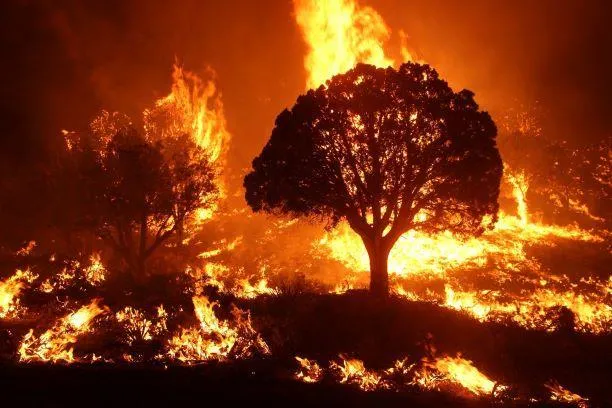
Devastating European wildfires in maps - and how they're being tackled
Wildfires are tearing through France and Spain, forcing more than 300,000 people to evacuate their homes.
France has seen more land burnt than any year this century, while officials in the Spanish capital Madrid say the fires are the worst the region has ever experienced.
It follows a sweltering summer of heatwaves across Europe that have seen temperatures soar above 40C (104F) in many places.
One of the worst affected areas is in Gironde, around the French city of Bordeaux, where more than 200,000 people have been forced from their homes.
The blaze has spread rapidly, tearing through forests and fields in France's famous wine region, and burning more than 162 sq miles (420 sq km) in less than four days - an area roughly four times the size of Paris.
It is now just nine miles (15km) from the south of Bordeaux.
The fires have also threatened a number of sensitive military and industrial sites in the area, including facilities that work on French ballistic missiles, rocket motors, and the processing of hazardous chemicals.
Satellite imagery above Gironde shows vast areas of scorched, blackened earth, with smoke drifting inland to the east.
The fires have become so extreme they have created their own giant fire thunderstorm.
A rare weather event, storms like these are formed when heat from the wildfires makes the air above the fire rise rapidly, carrying smoke, ash and water vapour high into the atmosphere.
As the air rises, it cools, and the water vapour condenses into a cloud. If the fire is powerful enough and the atmosphere is unstable, that cloud can grow into a cumulonimbus - the same type of cloud associated with thunderstorms.
If these clouds then become large enough, they can produce their own lightning, which can then start new fires. They can also occasionally bring hail and rain.
These extreme and unpredictable conditions make the fires all the more difficult to stop.
To combat them, French firefighters have been using planes loaded with fire retardant, as well as planes like the Canadair, which can scoop 6,000 litres of water from lakes or the sea in 12 seconds and drop it directly on the fires.
On dangerous days, loaded aircraft patrol high-risk areas before any fires have been reported, so they can drop within minutes of a sighting. Planes often fly in a continuous shuttle while retardant is laid along the edges of the fire and ground crews attack the flames directly.
In Gironde, about 2,500 firefighters, 1,500 military personnel, and 1,200 police officers and gendarmes have been involved in tackling the blaze.
Around the town of Lacanau, bulldozers, diggers and mechanical shovels have been used to carve a firebreak that is 100m (328ft) wide at points, according to French media.
A firebreak is essentially a stretch of land that has been stripped of all vegetation to stop the fire from spreading. It is key to strip the land of any potential fuel before the fire has a chance to reach it.
Spanish teams have been using many of the same techniques.
Francisco Martin, a government delegate in Madrid, described the fires as "undoubtedly the largest fire in the history of the Madrid region".
This summer's fires have been aided by the hotter, drier conditions caused by climate change, which allow fires to spread faster and burn more fiercely.
Many on the ground - in both Spain and France - are fearful that the coming week could see worsening conditions, with high pressure forecast to bring dry, settled and increasingly hot temperatures.
The fires near Bordeaux are in an area with many lakes
The region also borders the Atlantic ocean
The fires have torn through 162 sq miles in less than four days
Forests and fields have been scorched
1 of 4
%22%20%2F%3E%0A%20%20%0A%20%20%3C!--%20Premium%20Ambient%20Blurred%20Orbs%20--%3E%0A%20%20%3Ccircle%20cx%3D%22240%22%20cy%3D%22160%22%20r%3D%22160%22%20fill%3D%22hsl(186%2C%2055%25%2C%2030%25)%22%20opacity%3D%220.38%22%20filter%3D%22url(%23blur)%22%20%2F%3E%0A%20%20%3Ccircle%20cx%3D%22560%22%20cy%3D%22290%22%20r%3D%22200%22%20fill%3D%22hsl(246%2C%2055%25%2C%2040%25)%22%20opacity%3D%220.32%22%20filter%3D%22url(%23blur)%22%20%2F%3E%0A%20%20%0A%20%20%3C!--%20Inner%20Glassmorphic%20Badge%20--%3E%0A%20%20%3Ccircle%20cx%3D%22400%22%20cy%3D%22225%22%20r%3D%2268%22%20fill%3D%22rgba(255%2C255%2C255%2C0.02)%22%20stroke%3D%22rgba(255%2C255%2C255%2C0.08)%22%20stroke-width%3D%221.5%22%20%2F%3E%0A%20%20%0A%20%20%3C!--%20Initial%20Letter%20(Georgia%20Serif%20Italic)%20--%3E%0A%20%20%3Ctext%20x%3D%22400%22%20y%3D%22225%22%20font-family%3D%22'Times%20New%20Roman'%2C%20Georgia%2C%20serif%22%20font-size%3D%2276%22%20font-style%3D%22italic%22%20font-weight%3D%22bold%22%20fill%3D%22rgba(255%2C255%2C255%2C0.9)%22%20text-anchor%3D%22middle%22%20dominant-baseline%3D%22central%22%3ET%3C%2Ftext%3E%0A%20%20%0A%20%20%3C!--%20Micro%20watermark%20--%3E%0A%20%20%3Ctext%20x%3D%22400%22%20y%3D%22335%22%20font-family%3D%22'Inter'%2C%20sans-serif%22%20font-size%3D%2210%22%20font-weight%3D%22700%22%20fill%3D%22rgba(255%2C255%2C255%2C0.22)%22%20letter-spacing%3D%225%22%20text-anchor%3D%22middle%22%3EZYPHRA%20MATRIX%3C%2Ftext%3E%0A%3C%2Fsvg%3E)
Three dead and several injured in shooting at food festival near Seattle's Space Needle
This video can not be played
Witnesses describe 'horrible' and 'chaotic' scene after Seattle Center shooting
Three people have been killed and several others injured following a shooting at a food festival near the Space Needle in Seattle on Sunday.
Police said there were two suspects who were shooting at each other. One of the suspects is in custody and the other still at large, although officials have said there is no threat to public.
Shots rang out at around 18:00 local time (01:00 GMT) at one of the city's most popular tourist spots and as the annual Bite of Seattle food festival drew even more people to the downtown area.
Two deaths were confirmed at the scene, and one person died later in hospital. Those injured include a two-year-old boy, officials said.
Videos shared online showed people taking shelter inside the city's iconic Space Needle.
People could be seen crouched on the ground, taking cover behind pillars and shelves of merchandise in the Space Needle's lobby during the shooting.
Faith Adia Hunter told Associated Press that one of the shooters was near her and her friends when they heard the shots, sending them fleeing for shelter in the Seattle Children's Museum.
"We were right next to him when it started so we took off running," she said. "So we took off running too into the building with the crowd."
The Seattle Police Department said an investigation remains ongoing and urged the public to avoid the area.
Mayor Katie Wilson said in a statement that she wanted to "thank the Seattle police officers who responded to the scene and took a suspect into custody".
She had originally announced two suspects had been taken into custody before updating her statement later on Sunday evening.
Four of the injured were taken to hospital in a stable condition, while a fifth chose not to, the fire department said.
One attendee told local media that scene was "pure chaos" following the gunfire
Representatives for Seattle and Washington state have condemned the shooting as an act of "senseless violence".
"My prayers are with the families of the victims, and the responders as they work to keep people safe," Washington Governor Bob Ferguson said on social media.
The US flag on top of the Space Needle was lowered to half-mast after the shooting
Congresswoman Pramila Jayapal, who represents Seattle, added: "Our hearts go out to all those impacted by this senseless violence," she wrote on social media.
"We are in close touch with Seattle Mayor Katie Wilson and Governor Bob Ferguson, and co-ordinating across multiple levels of government to get updates on the situation."
Wilson also condemned the shooting as an "act of horrific violence".
"Impacted families are living through the worst moment of their lives, and an entire community is trying to understand how a gathering built around culture, connection, and joy ended in gunfire."
"Tonight, our attention belongs to the people whose lives were taken, those fighting to recover, and the families beside them," she added.
"Seattle grieves with you, and we will stand with you in the difficult days ahead."
Toronto police officer killed in raid linked to US consulate shooting
Trump takes swipes at press during White House Correspondents' Dinner
Teen pleads guilty in Georgia school shooting that killed four